
Uptake screening as a service, in the organism that matters to you
DrugUptech operates as a contract research organisation. You send compounds; we run the assays, benchmark them and return decision-ready reports.
Get past the Gram-negative wall
Decades of target-based antibacterial campaigns produced potent enzyme inhibitors that never became drugs because they could not accumulate in whole cells, especially Gram-negatives. Re-engineering a compound to accumulate can restore activity, but only if accumulation is measured early enough to guide chemistry.
- Accumulation ranking of hits and analogues in ESKAPE pathogens, MRSA, Mycobacterium smegmatis, Candida and your own clinical isolates.
- Efflux vs permeability using energy supplementation.
- Uptake paired with MIC so you see whether low potency is a target problem or a delivery problem.
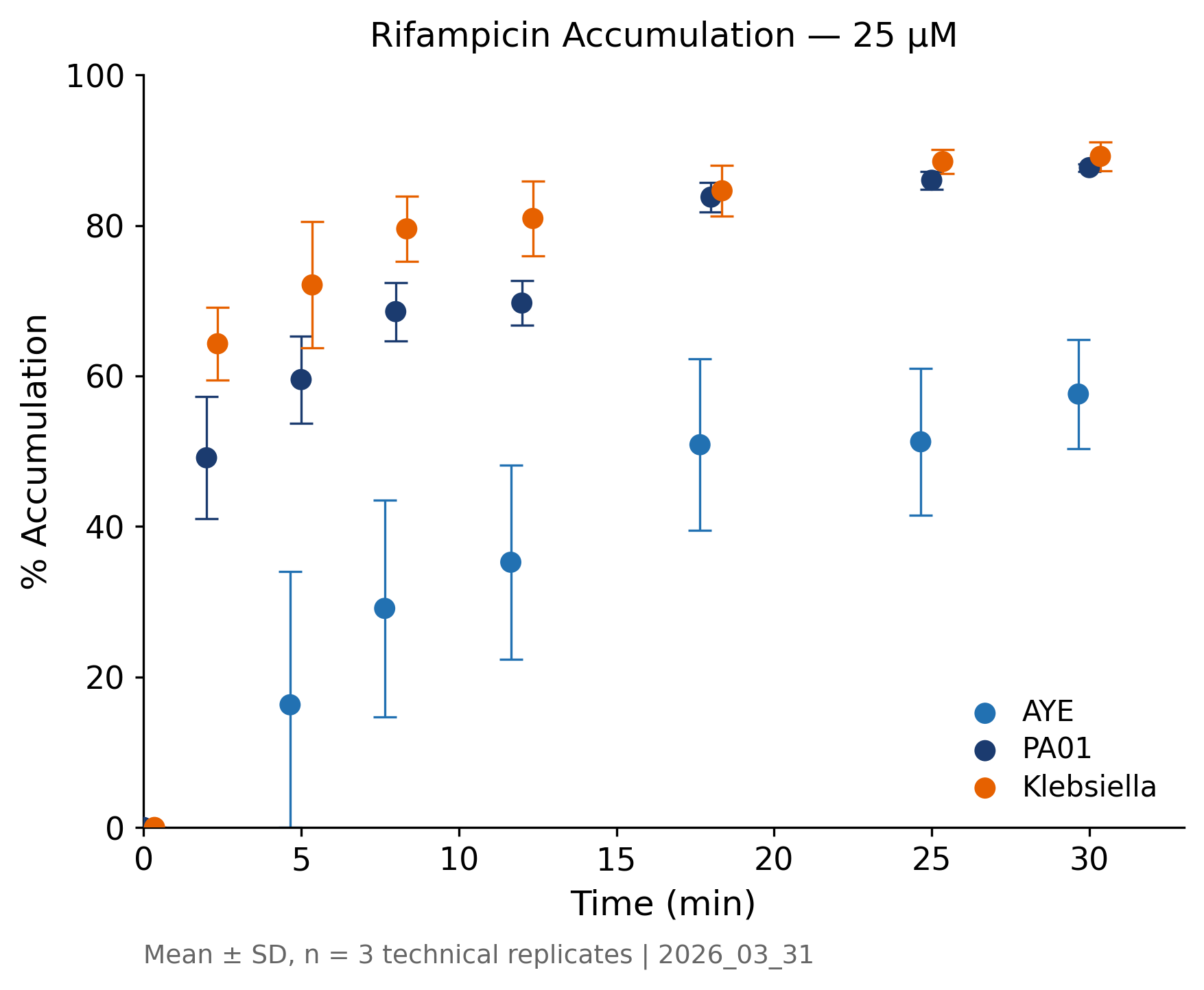
- Benchmarked against colistin, ceftazidime, rifampicin, gentamicin, tetracycline and ciprofloxacin.
Protoplast viability and uptake analysis
Our plant work is a specialism in its own right: viability-controlled uptake measurements in Arabidopsis Col-0 protoplasts, with leaf-tissue assays for foliar questions. It has its own page.
Go to Plants & protoplasts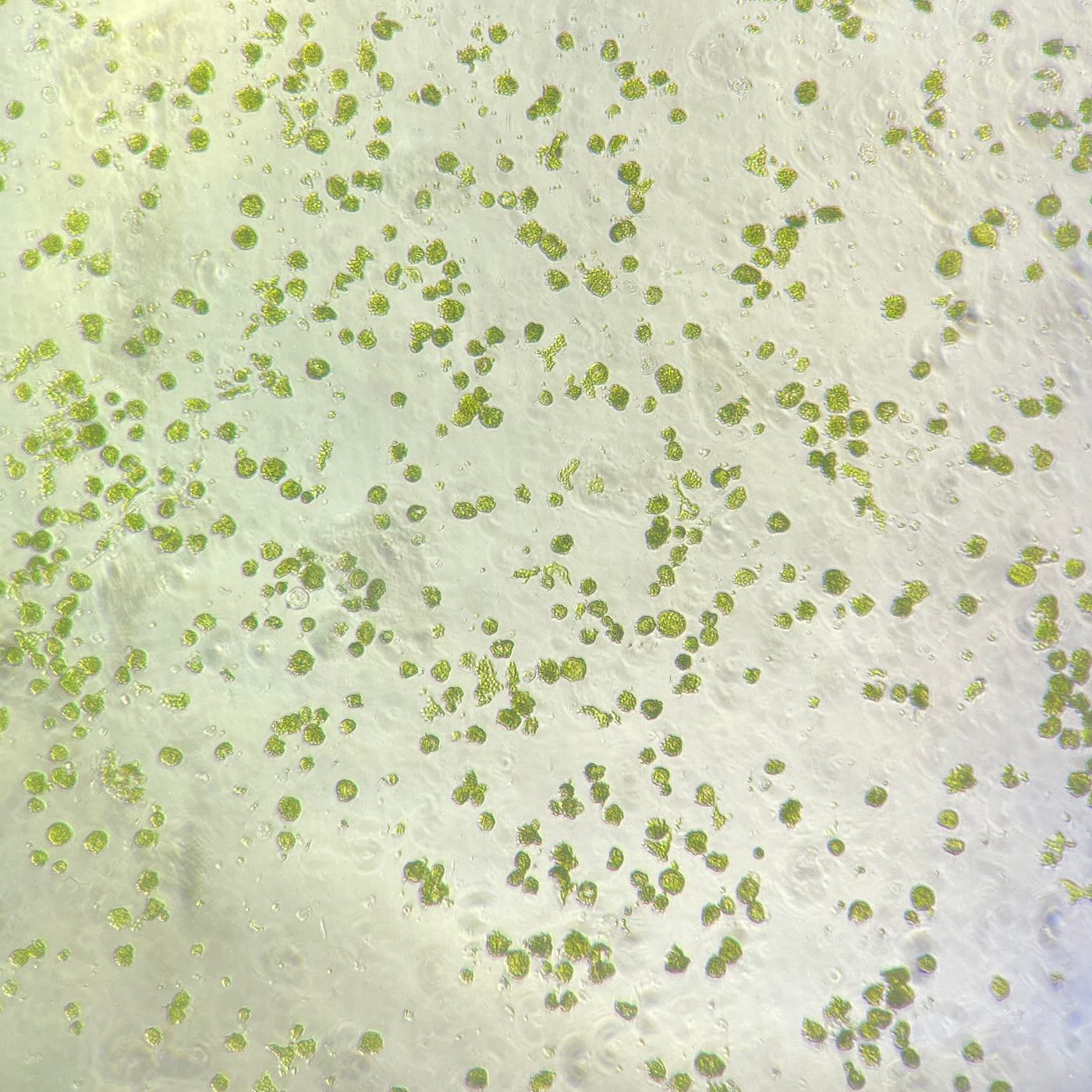
Cell-based uptake from hit triage to lead optimisation
Early failures cost most when they are discovered late. Screening uptake alongside potency in the relevant human cell line de-risks candidate selection and gives medicinal chemists a measurable property to optimise.
- Uptake screening in Caco-2, HEK293T and other lines, including resistant derivatives.
- Kinetic profiling to separate fast passive entry from slower carrier-mediated uptake.
- Efflux liability assessment with transporter inhibitors or engineered lines.
- Cytotoxicity paired with uptake so exposure and effect are measured in the same experiment.
Where uptake data pays back
Hit-to-lead and lead-optimisation stages typically cost several million dollars each. A compound that fails for accumulation after those stages wastes all of it. An uptake screen at hit identification costs a fraction of one analogue series and removes the liability before it compounds.
Antibody-drug conjugates and larger modalities
We are extending the platform to nanobodies and antibody-drug conjugates. If you have a conjugate uptake question, talk to us about a pilot.
For research groups
We collaborate with academic labs on uptake, efflux and membrane-interaction questions, from single-compound mechanism studies to library screens. Grant-costed projects, co-authored outputs and method transfer are all possible.
What we offer
| Service | What is measured | Typical scope |
|---|---|---|
| Uptake screen | % accumulation and kinetics for each compound in one organism or cell line, benchmarked | From 10 compounds per assay |
| Uptake + viability / efficacy | Uptake as above plus MIC, growth inhibition or cytotoxicity in the same programme | From 10 compounds per assay |
| Efflux contribution | Uptake with and without energy supplementation or efflux inhibitors | Per compound, per organism |
| Multi-organism panel | The same compounds across a panel of strains, species or cell lines | Per panel |
| Protoplast viability + uptake | Viability-controlled uptake in Col-0 protoplasts by real-time fluorescent detection; see Plants | Per compound set |
| Leaf tissue uptake | Foliar uptake over hours in leaf discs from any plant species, formulation and adjuvant comparisons | Per active or formulation set |
| Custom system set-up | Validation of your own strain, isolate, cell line or tissue on the platform | One-off set-up |
Every project is scoped individually around your compounds, organisms and decision points. Make an enquiry and we will come back with a proposal.
From first call to full report in about two months
Project start
Scoping call, compounds received, organisms and readouts confirmed.
Initial set-up report
Detection mode per compound, MIC50 or dose range, benchmark performance.
Full uptake report
Accumulation, kinetics, efflux contribution, viability or efficacy, with raw data.
Ready to see how much of your compound gets in?
Tell us about your compounds and target organisms. We will scope the assay, agree the readouts and return a set-up report within three weeks.